Trash Day Money Guide: Turning Valuable Trash into Cash and Upgrades
How money works in Trash Day: which finds sell, where to deposit them, and what to buy first from the game's vending machines and shops.
Published: Trash Day Wiki Editorial Team
Table of Contents
How Money Works in Trash Day
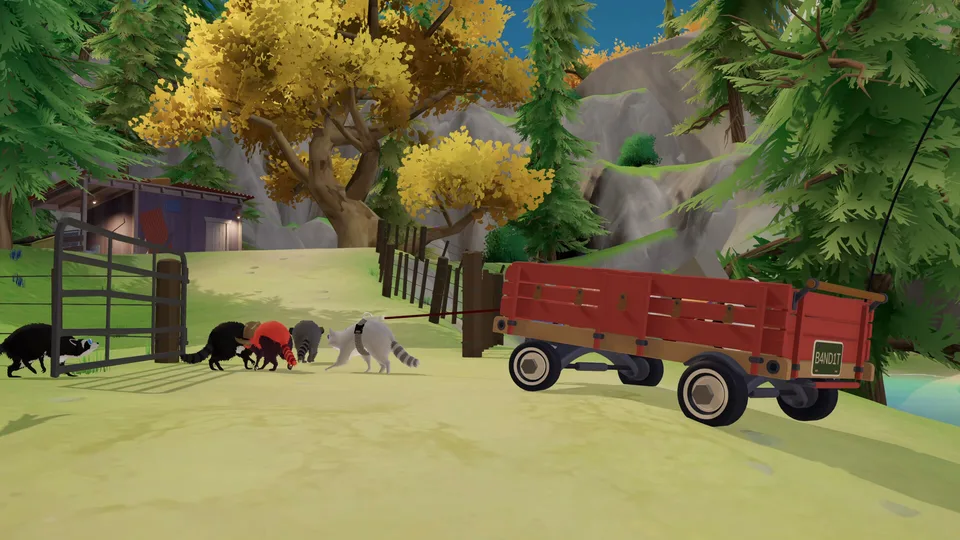
Trash Day is a raccoon heist, and the paycheck comes from other people's trash. Your crew escapes Animal Control, steals a wagon, and fills it with whatever the neighborhood, wilderness, and junkyards will yield. Depositing that loot converts it into cash, which is what funds everything else in the run — this economy loop is documented across the game's store description and developer updates for the demo and the full game released on October 13, 2026.
Money in Trash Day is time converted into value. A gold bar that never reaches the selling machine earns nothing, and a wagon that flips on a rockslide loses both the cargo and the minutes spent collecting it. The profitable mindset is banker, not hoarder: grab high-value items, bank them often, and spend with a purpose.
The Selling Machine
The cash-out point for your haul. Depositing valuable trash here converts finds into money, so plan routes that end legs at a machine rather than deep in dangerous territory.
Checkpoint Deposits
Mid-route banking. Depositing valuable trash at checkpoints keeps earnings safe from crashes and lets you reload a smaller, faster wagon for the next stretch.
Vending Machines and Shops
Where the cash goes. Developer updates document shops that sell tools, wagon repairs, and cosmetics, turning each deposit into either progress or style.
What Pays Best
Exact payouts vary by item, but community summaries of the game consistently group the same finds at the top of the value list:
Gold bars and other obvious treasure — the anchor items of a profitable load.
Appliances such as microwaves — solid value at a carryable size.
Tires and furniture — bulky payouts best grabbed when the wagon is already nearby.
Planks and bungee cords — not sold, but they protect the payload that does get sold.
A Spending Order That Works
Fix first: A wagon with loose wheels or missing parts loses cargo; early cash into repairs protects every later deposit.
Buy tools second: The impact wrench tightens wheels, and planks and bungee cords solve terrain problems that would otherwise scatter the load.
Keep an adrenaline reserve: Adrenaline shots revive incapacitated teammates, documented in official patch notes — worth budgeting for in co-op.
Cosmetics last: Raccoon skins and collar colors are the fun purchase, but they do not keep the wheels on.
Tip
Deposit at every checkpoint you pass. A run that banks three smaller payouts usually beats one heroic haul that ends under a truck.
Warning
Weigh every detour against the payout. Crossings with traffic, bear traps, and rockslides are the expensive parts of the map; carrying low-value junk through them is how runs go broke.
Demo vs Full Game Earnings
The free demo compresses the economy into one area: fewer sources, shorter routes, and a quick taste of deposits and shop purchases. The full game stretches the same loop across six areas, which makes checkpoint deposits, repair budgeting, and route planning much more important. The skills transfer directly — learn the payout discipline in the demo before the full route tests it.
Frequently Asked Questions
Where do you sell trash in Trash Day?
At the selling machine, with checkpoint deposits available along the route for banking valuable finds mid-run.
What should you buy first?
Wagon repairs and tools such as the impact wrench, planks, and bungee cords come first; adrenaline shots matter in co-op, and cosmetics are best saved for last.
Does the demo earn the same money as the full game?
The demo teaches the same deposit-and-shop loop in one area. The full game adds more areas and shop variety, but the money habits are identical.