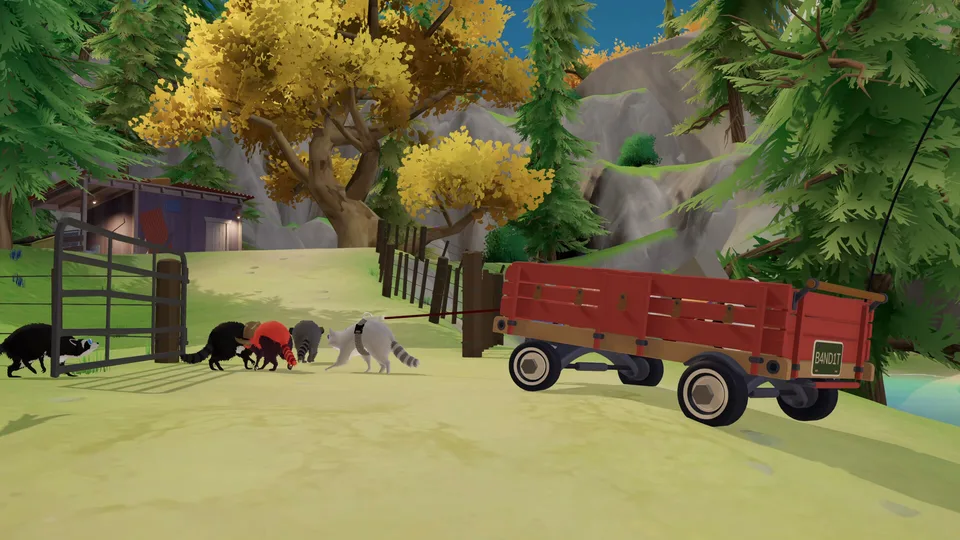
Trash Day Scavenging Guide: Tips for Finding Valuable Items
Where to scavenge in Trash Day: which containers, yards, and areas hold valuable trash, and how to carry finds back to the wagon safely.
Published: Trash Day Wiki Editorial Team
Table of Contents
How Scavenging Fits the Heist
In Trash Day, scavenging is the gathering half of the loop: the crew escapes Animal Control, steals a wagon, and then strips the surrounding world of anything valuable. The game is built by Off by One Games for one to six players, and the loop is the same either way — search containers and cluttered spots, carry finds back, load the wagon, and keep the route moving toward Raccoon Paradise.
Scavenging well is mostly about time management. Every item you grab is a trip away from the wagon, and the physics means a heavily loaded wagon is slow, tippy, and hard to rescue. Good raccoon squads scavenge in short bursts, keep the wagon close to the loot, and leave obvious junk behind.
Trash Cans and Curbside Piles
The most common sources. Cans and curb piles along the route are quick to check and often hold small useful items or modest-value trash when you need to top off a load.
Dumpsters and Backyards
Deeper diving spots. These take longer to search but tend to hold the bulkier finds — appliances, tires, and furniture pieces that anchor a profitable wagon load.
Wilderness and Route Landmarks
Between neighborhoods, the wild areas and landmarks along the route hide items away from the road. Watch for wildlife while scavenging here; dogs and bee swarms patrol more than just town streets.
What to Grab First
Value is not the same as weight. A full wagon of heavy junk pays less and flips more often than a mixed load built around a few valuable pieces. Community summaries of the game consistently point to the same categories worth prioritizing:
Gold bars and other obvious treasure pieces.
Appliances such as microwaves that combine decent value with carryable size.
Tires and furniture for bulky value once the wagon is already close by.
Tools like planks and bungee cords that make the next leg of the route survivable.
Carrying Finds Back Safely
Grab and go: Pick up an item, and head straight back — do not chain pickups across the whole map with an empty wagon waiting.
Load deliberately: Place heavy items low and balanced so the wagon stays controllable on the next stretch.
Deposit often: Use checkpoint deposits along the route to bank valuable trash instead of risking everything on one long run to the selling machine.
Watch the exits: Before committing to a dumpster deep in a yard, check how you will get back out with an armful of trash — and whether a dog is between you and the road.
Tip
In co-op, split the jobs: one or two raccoons scavenge while the rest guard or move the wagon. A pickup that ends with everyone empty-handed and the wagon overturned is worse than a short, boring run.
Scavenging in the Demo vs the Full Game
The free demo covers one overall area, so scavenging there teaches the basics: container searching, carrying, and loading. The full game, released on Steam on October 13, 2026, expands the route to six areas with new hazards and environments, which makes route planning and load discipline far more important than in the demo slice.
Frequently Asked Questions
What are the most valuable items in Trash Day?
Gold bars, appliances like microwaves, tires, and furniture are repeatedly named by players as the finds worth building a load around. Exact payouts vary, and the selling machine converts deposits into cash.
Can you scavenge while playing solo?
Yes. Trash Day supports single-player, but one raccoon must do the searching, hauling, and driving jobs alone, which makes checkpoint deposits more important.
Do scavenged items respawn between runs?
The documented loop is per-run scavenging: each attempt starts a fresh escape from Animal Control with the level's trash available again.